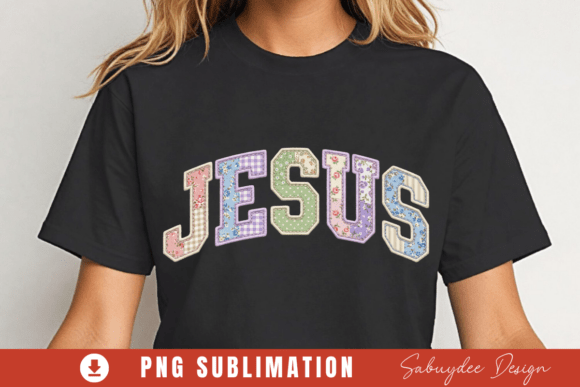
Jesus Embroidered Christian Sublimation
A Quiet, Reverent Shape That Demands Thoughtful Placement
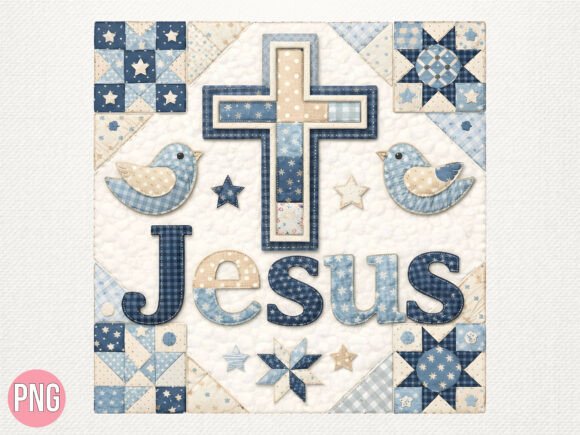
First glance at Jesus Embroidered Christian Sublimation isn’t about flash—it’s about presence. The design carries a calm, centered weight: clean lines, balanced proportions, and a visual rhythm that leans into dignity over decoration. It doesn’t shout; it invites pause. As a designer who’s stitched hundreds of faith-based motifs—from bold cross banners to delicate nativity silhouettes—I immediately sense this one belongs on something meant to be held, worn gently, or displayed where quiet intention matters. Think nursery wall art, a linen tea towel folded beside a kitchen sink, or the inside hem of a baby blanket—not a high-contrast streetwear tee.
Where It Lives Best in Real Projects
I recently tested Jesus Embroidered Christian Sublimation on a heavyweight organic cotton tote for a local boutique’s Easter collection. The result? A soft, grounded focal point—neither stiff nor saccharine. It worked beautifully because the fabric had body, the hoop size allowed room for subtle stitch gradation, and the design’s moderate detail level didn’t fight the weave. That same ease translated to a brushed cotton apron for a church bake sale vendor and a lightweight pillow cover for a pediatric waiting room. In each case, the design felt *appropriate*, not imposed.
It shines in contexts where sincerity outweighs spectacle: personalized baptism gifts, small-batch sweatshirt embroidery for youth group retreats, embroidered patches sewn onto denim jackets for mission trips, or even as a subtle motif on the corner of a hand-stitched kitchen towel. For Etsy sellers, it fits cleanly into “meaningful handmade product” listings—especially when paired with natural fibers and neutral thread palettes. As a digital embroidery file, it holds up well in printable mockups: the composition reads clearly at thumbnail size, and its balanced negative space ensures legibility across fabric types without relying on heavy outlines.
Where Caution Is Built Into the Stitch
This isn’t a design you’ll want to force onto every surface. On thin jersey t-shirts? Risky—unless stabilized heavily and stitched with reduced density, the fill areas may pucker or show through. Stretchy fabrics like performance knits need extra care: test first, use cutaway stabilizer, and consider simplifying dense satin-stitch zones manually if your editing software allows. Curved surfaces—like the front of a structured cap—will compress the top and bottom of the motif unless digitized with contour compensation (which this file doesn’t appear to include). If you’re planning Jesus Embroidered Christian Sublimation for caps or baby onesies, expect minor distortion without manual repositioning or resizing.
Dark fabrics demand thoughtful thread selection: light ecru or heather grey threads read with warmth and reverence, but pure white can feel stark or clinical. Conversely, on light linens or ivory cotton, deeper tones like charcoal or navy satin stitch add gravitas without heaviness. Tiny lettering—should any be included in alternate versions—isn’t the strength here; this is a shape-first design. Avoid shrinking it below 3.5 inches wide unless you’ve verified fine detail retention in your machine’s test run.
What It Adds—And What It Asks Of You
Jesus Embroidered Christian Sublimation quietly elevates perceived value. Customers notice the restraint—the absence of clutter, the intentional spacing, the way the motif sits *with* the fabric rather than on top of it. That builds trust: it signals craftsmanship, not clipart. For craft businesses and small shop owners, that translates to stronger brand consistency—especially when used across complementary items (e.g., matching tote + tea towel + patch set). It also increases giftability: people choose it not just for message, but for how it *feels* in their hands.
But it asks for intentionality in return. It won’t carry weak execution. Poorly matched thread colors mute its warmth. Inconsistent tension blurs its quiet clarity. Over-stabilizing kills its softness; under-stabilizing risks skipped stitches in satin zones. And while it works for both personal and commercial embroidery, always confirm licensing before listing finished products or reselling the digital embroidery file—especially if marketing as part of a T-Shirt Designs collection or faith-based digital bundle.
Practical Designer Notes Before You Stitch
- Always test first—on scrap fabric identical to your final project, using your actual thread and stabilizer combo.
- Check stitch density—dense fill areas may need slight reduction for lightweight or textured fabrics.
- Confirm hoop size compatibility—don’t assume it fits standard 4x4 without measuring the design dimensions.
- Inspect small details—especially inner curves and connecting points—under magnification if needed.
- Preview in black and white—to assess contrast and balance without color distraction.
- Use appropriate stabilizer—cutaway for knits, tear-away for stable wovens, no-show mesh for sheer layers.
- Compare thread colors on light vs. dark backgrounds—what reads softly on oat linen may vanish on charcoal fleece.
- Verify commercial use rights—if selling finished embroidered items or bundling as design assets.
Not Just a Design—A Design Decision
Choosing Jesus Embroidered Christian Sublimation isn’t about filling space—it’s about honoring context. It’s the difference between a rushed holiday embroidery and a keepsake that lands with quiet resonance. For embroidery designers, small business owners, and makers who value meaning as much as method, it’s a reliable, reverent tool—not a trend, but a touchstone. Use it where stillness matters. Where fabric breathes. Where the stitch serves the sentiment.